
News
Ford Ships First Michigan-Made LFP Battery Cells for Fathom Prototypes
Ford's Michigan plant has shipped its first LFP cells to Louisville for Fathom prototypes. Ford lists the truck from $28,350, with preorders in early 2027.
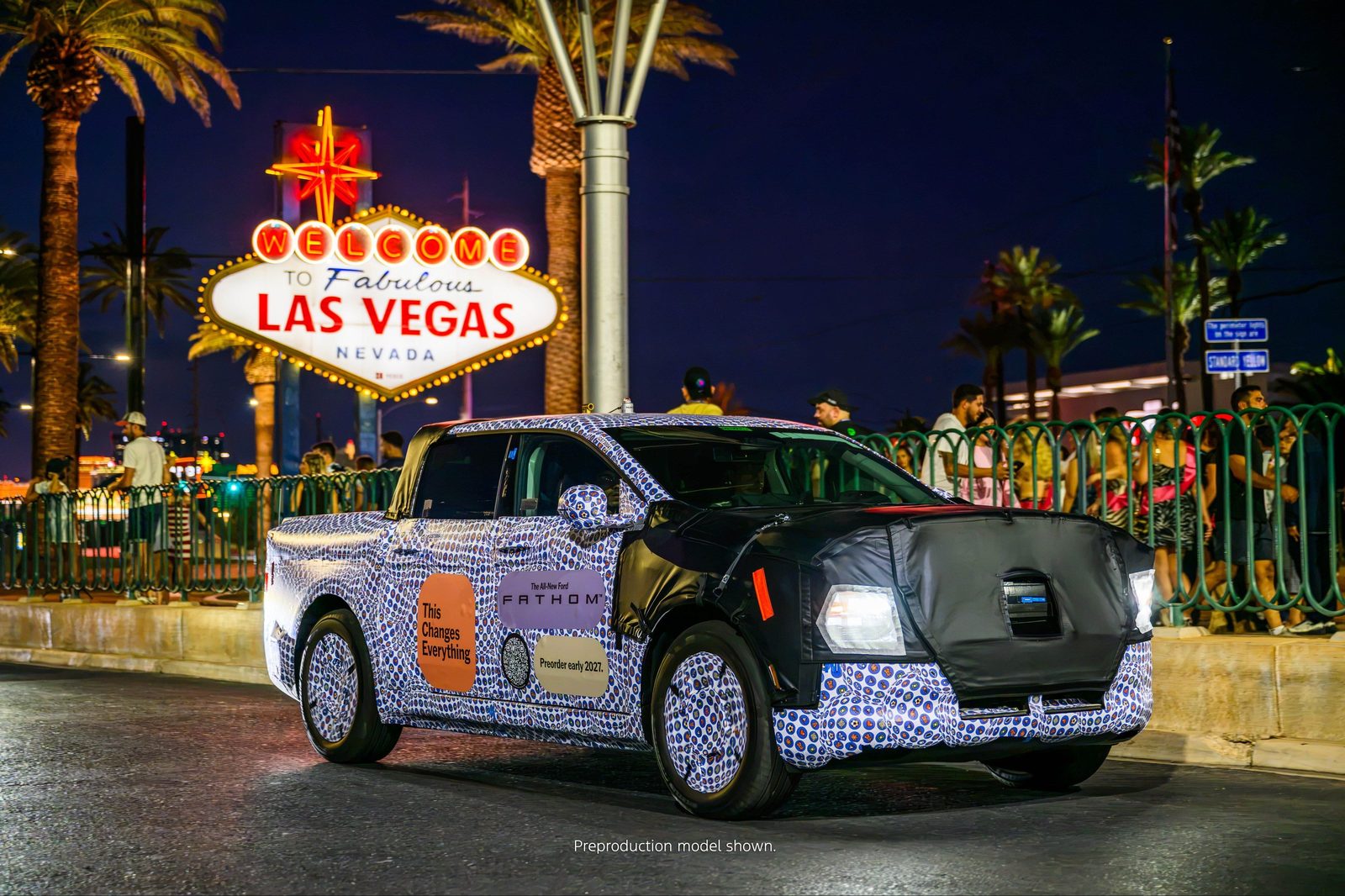
Ford has started shipping the first lithium iron phosphate (LFP) battery cells from its new BlueOval Battery Park Michigan plant to Louisville Assembly Plant, where they will power Fathom prototypes. For shoppers, this is the battery Ford chose to help hold down the cost of its midsize electric pickup, which starts at $28,350 MSRP. Ford still has not published the Fathom’s battery size, range, towing or payload, and these cells are going into prototypes, not trucks for sale.
Ford says it will be the first to deliver LFP batteries in the U.S. for mainstream consumer automotive use. The next step is a battery pack plant in Marshall, Michigan, which Ford plans to have running in 2027 ahead of the Fathom’s launch.
Last updated: November 19, 2026.
Sources
- Ford, “Ford Ships First Battery Cells from Michigan Plant for Fathom Electric Truck; Key Milestone for Ford Energy” (Charles Poon, Ford vice president of Hardware Engineering, November 18, 2026): the first cell shipment, LFP chemistry, prismatic cells, the structural pack, line speed, quality checks, AC bidirectional power and the 2027 pack plant
- Ford, Fathom page on ford.com (read November 19, 2026): the $28,350 starting MSRP with the standard-range battery, the $1,595 destination and delivery charge, preorders in early 2027 and range not yet available
What Ford shipped, and what it still hasn’t said
| Item | What Ford says | Source |
|---|---|---|
| What shipped | The first LFP prismatic battery cells from the plant | Ford From the Road |
| Built at | BlueOval Battery Park Michigan, a plant Ford owns and operates | Ford From the Road |
| Headed to | Louisville Assembly Plant, to power Fathom prototypes | Ford From the Road |
| Cell chemistry | Lithium iron phosphate (LFP), with no nickel or cobalt | Ford From the Road |
| Cell shape | Prismatic (rectangular) cells that fit directly into the chassis | Ford From the Road |
| Battery technology | Ford says its search for proven battery technology led it to CATL | Ford From the Road |
| Pack design | Structural pack that is part of the vehicle structure, with compact power electronics built in | Ford From the Road |
| Line speed | 40 cells per minute | Ford From the Road |
| Battery pack plant | Planned to be running in Marshall in 2027, ahead of launch | Ford From the Road |
| Starting MSRP | $28,350 with the standard-range battery, plus $1,595 destination and delivery | ford.com Fathom page |
| Preorders | Early 2027 | ford.com Fathom page |
| Battery size (kWh) | Not published | Not in Ford’s article or on ford.com |
| EPA range | Not yet available | ford.com Fathom page |
| Towing and payload | Not published | Not in Ford’s article or on ford.com |
TruckDaily take
Who should care. If you have been waiting for an electric pickup near $30,000, this is the most concrete sign yet that Ford can build the Fathom’s battery itself. LFP cells skip nickel and cobalt, which Ford says helps hold down cost, and Ford says they hold up over years of charging and use. That matters if you plan to keep the truck a long time or use its battery to back up your house.
Who should skip. Skip the excitement if you need a range figure, a tow rating or a payload number before you shop. Ford has not published any of them, and a cell shipment to prototypes does not change that. Skip it too if you need a midsize electric pickup before 2027. The Fathom does not open for preorders until early 2027.
What we’d do. Plan around the $28,350 MSRP, or $29,945 with destination, and leave the range column blank until Ford fills it in. Sign up on Ford’s Fathom page if you want a preorder invite, but put no money down on a guess about battery size. If you need a compact pickup now, our report on 2027 Maverick pricing shows where Ford’s smallest truck starts. Our earlier Fathom price report covers the confirmed tech list.
Why Ford picked LFP prismatic cells
Ford says the goal from the start of its Universal Electric Vehicle Platform work was an efficient LFP prismatic battery that would make EVs much more affordable. Alan Clarke, Ford’s vice president of Advanced Development Projects, set that challenge. Ford says it wanted battery technology that was proven in the field and ready to build at scale, and that the search led it to CATL, which Ford calls the world’s leading battery manufacturer.
Ford calls the battery one of the biggest contributors to an EV’s cost and weight. Its answer, in its own words, is “efficiency over excess.” Ford says it right-sized the Fathom’s battery instead of adding more cells, but it has not said how big that battery is.
The battery is part of the truck’s structure
Ford says the Fathom’s pack is a structural component, not just a battery housed inside the truck. Ford chose prismatic, or rectangular, cells because they fit directly into the chassis and cut structural costs. It also combined the pack’s electrical and sensing connections into one flexible circuit board and built compact power electronics into the pack. Ford says fewer parts mean less weight and simpler manufacturing, and that this design helps make its new Universal EV Production System possible.
Home power is on the list, with conditions
Ford’s article says AC bidirectional power lets the truck take electricity from a properly equipped home and send power back to it. Ford’s fine print adds conditions. Ford says Home Power Management requires an available Ford Home Power Station, utility approval and an active Ford trial or plan. Home Backup Power requires an available Ford Home Power Station and Home Backup Panel, and may require utility notice or approval. Neither Ford page lists prices for that home equipment.
How fast the Michigan plant builds cells
Ford says the BlueOval Battery Park Michigan lines can deliver 40 cells every minute, which Ford says puts them among the fastest LFP prismatic battery assembly lines outside China. Ford says the plant has capacity for more. Workers use AI-powered image recognition and other tools to spot defects during production, and Ford says its goal is defect rates low enough to track per billion cells rather than per million.
What comes next
Ford says the first shipment will power Fathom prototypes and inform every phase of development. Next, Ford plans to have the battery pack plant in Marshall running in 2027, ahead of the Fathom’s launch. Ford also says what it is learning in Michigan is already informing its Ford Energy business as it prepares for battery energy storage production in Glendale, Kentucky.
FAQ
Is the Ford Fathom in production?
No. The cells Ford shipped from Michigan are going to Louisville Assembly Plant to power Fathom prototypes. Ford plans to have its battery pack plant in Marshall running in 2027, ahead of the Fathom’s launch.
What kind of battery does the Fathom use?
Ford says the Fathom uses lithium iron phosphate (LFP) prismatic cells, with no nickel or cobalt, built at BlueOval Battery Park Michigan. The pack is a structural part of the truck.
How big is the Fathom’s battery, and what is its range?
Ford has not published the battery size, and its Fathom page says EPA range is not yet available. Ford has not published towing or payload either.
How much does the Ford Fathom cost?
Ford lists a $28,350 starting MSRP with the standard-range battery, plus $1,595 for destination and delivery, which comes to $29,945. Preorders begin in early 2027.
Can the Fathom power a house?
Ford says AC bidirectional power lets the truck take electricity from a properly equipped home and send power back to it. Ford says that requires an available Ford Home Power Station, and backup power also requires a Home Backup Panel.
Last updated November 19, 2026. Author: TruckDaily.